SolarWinds Additional Polling Engine vs. Platform Remote Collector: Which Polling Architecture Fits?
14 min read
Read article →Decouple frontend and backend with ReactJS, ColdFusion, REST, and JSON to build modular web applications.
Web development changes continuously. New devices, higher usability expectations, and growing applications demand a clear structure. One approach is to decouple the frontend from the backend. ReactJS manages the user interface, while ColdFusion exposes data and business logic through a REST API.
A REST API exposes resources through clearly defined HTTP endpoints. Client and server typically exchange JSON documents. The interface remains stateless: every request contains the information required to process it.
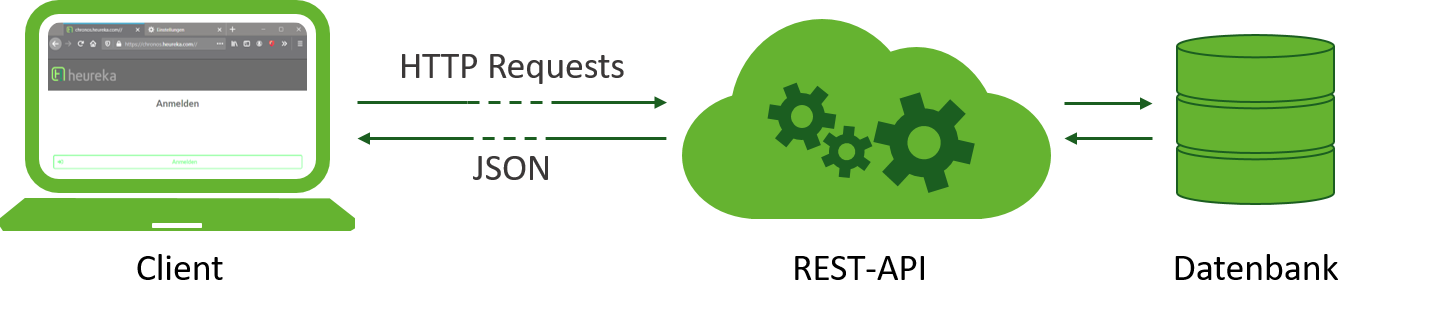
The client communicates with a REST API over HTTP using JSON.
This separation has a practical benefit. The backend can serve mobile apps or other systems in addition to the web interface. The frontend, in turn, does not need to know how data is stored internally.
ColdFusion can implement the business logic and REST endpoints. In the architecture described here, the CFWheels framework organizes the application into models and controllers. Models represent data and rules; controllers process HTTP requests and return the appropriate responses.
Additional services encapsulate business functions that do not belong directly in a controller. Database access can be handled through an ORM. The result is a backend with separated responsibilities and functions available through a consistent API.
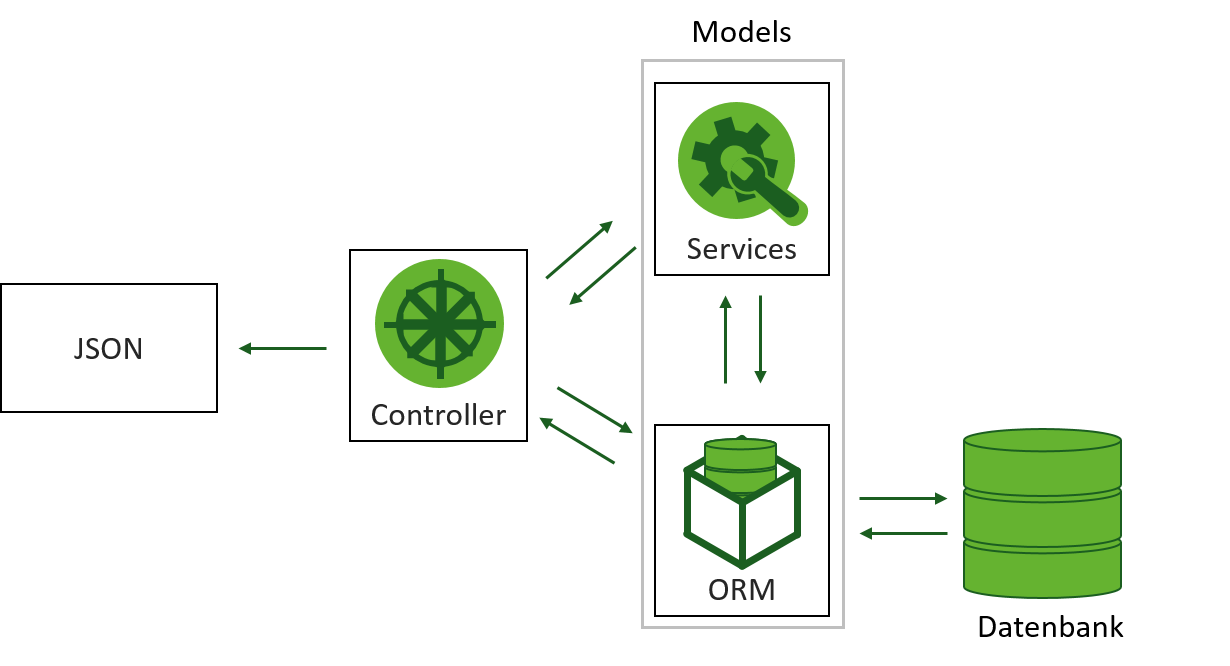
Controllers coordinate services and data access and return JSON to the client.
ReactJS builds the user interface from reusable components. A component combines presentation and behavior for a clearly bounded part of the application. State changes cause React to render the affected areas again.
The frontend calls REST endpoints asynchronously and processes the JSON data returned. It can be developed and deployed independently of the ColdFusion code as long as the API contract remains stable.
With a stateless API, authentication is not managed through a conventional server-side session. After a successful login, the server can instead issue a JSON Web Token (JWT). The token contains a header, payload, and cryptographic signature.
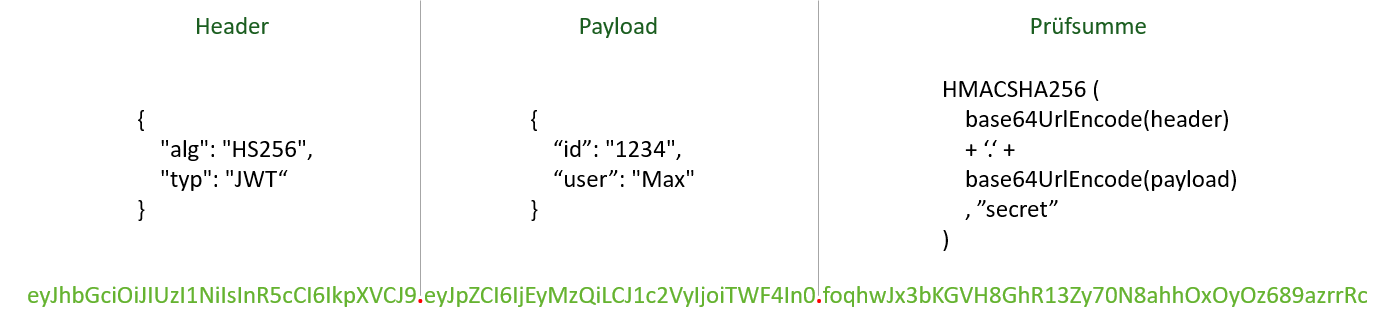
The token carries the information required for subsequent requests.
The client submits the token with later requests. The server verifies its signature and validity before carrying out the requested action. The frontend can retain the token locally; the actual implementation must make deliberate decisions about storage, expiration, renewal, and protection against attacks.
The decoupled architecture makes it possible to load data asynchronously and update only the parts of the interface that changed. Frontend and backend can be developed, tested, and deployed as separate packages.
The separation also creates a clear boundary: the REST API is a contract that must be maintained and versioned. Error handling, authentication, and authorization are as much a part of that contract as the structure of the JSON responses.
ColdFusion and ReactJS complement one another in this architecture. ColdFusion provides data and business logic, ReactJS delivers a component-based interface, and REST with JSON connects the two sides. Decoupling improves reuse and supports parallel development, but it requires a carefully defined and secured API.
Talk to our experts about your specific challenges. We provide honest assessments and actionable recommendations.
Practical implementation
Discuss your current situation with heureka. Together, we can clarify priorities, ownership, and the most useful place to start.
14 min read
Read article →12 min read
Get the checklist →16 min read
Get the whitepaper →